

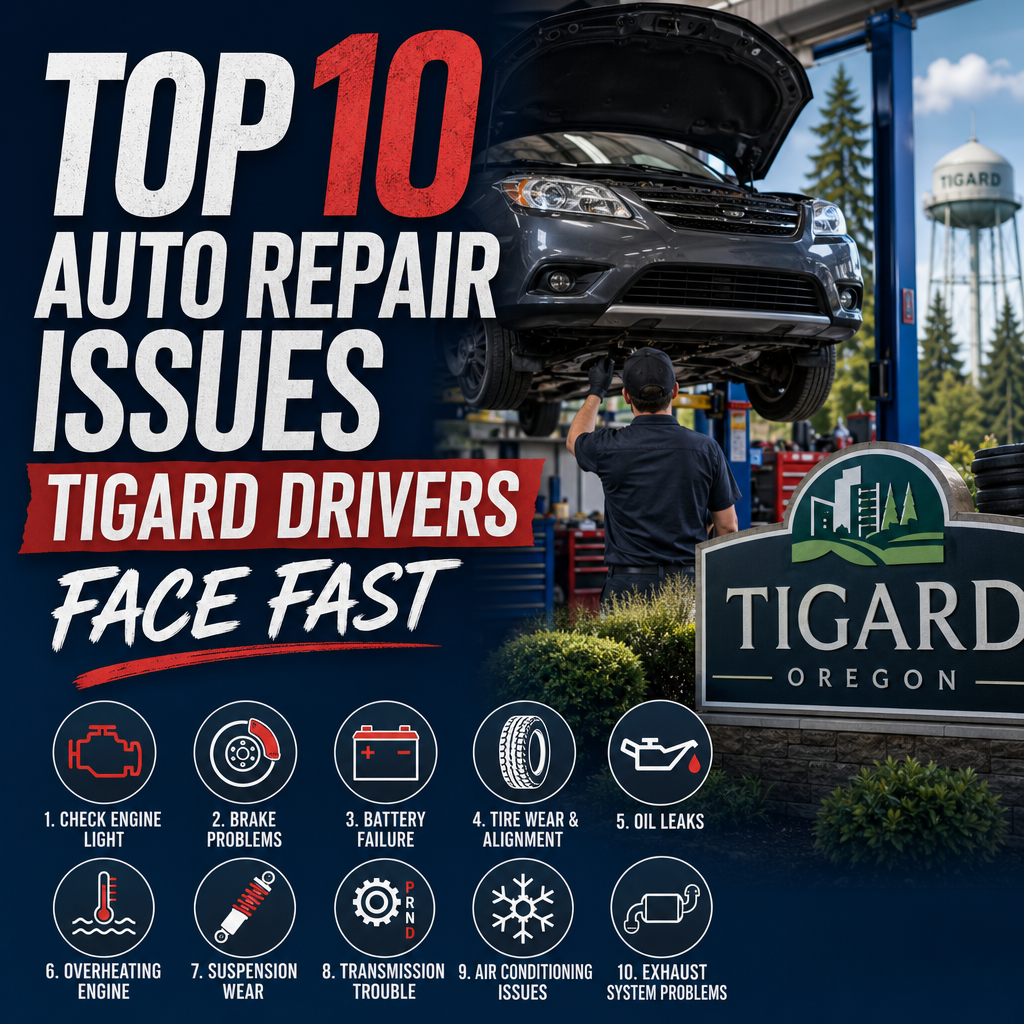
Top 10 Auto Repair Issues Tigard Drivers Face Fast
Top 10 Auto Repair Issues Tigard Drivers Face — And How to Fix Them Fast
If you drive in Tigard, you already know your car has to handle a lot: stop-and-go traffic, wet Pacific Northwest weather, potholes, and daily commutes that can wear parts down faster than expected. That’s why staying ahead of common auto repair issues Tigard drivers face can save you time, money, and a lot of stress.
Below are the top 10 problems local drivers run into most often — plus quick ways to spot them and get them fixed fast.
1. Brake Wear and Squealing
Brakes are one of the most frequently serviced systems on any vehicle.
If you hear squealing, grinding, or feel a vibration when stopping, your brake pads or rotors may be worn. Don’t ignore it. Driving on damaged brakes can lead to more expensive repairs and unsafe stopping distances.
Fast fix
- Have your brake pads and rotors inspected right away
- Replace worn pads before they damage the rotors
- Flush brake fluid if it’s old or contaminated
2. Dead or Weak Batteries
Cold, damp weather can be tough on batteries. Many Tigard drivers find out their battery is failing only when the car won’t start.
Slow cranking, dim headlights, and clicking noises are all warning signs.
Fast fix
- Test the battery and alternator
- Replace batteries that are older than 3–5 years
- Clean corrosion from terminals and connections
3. Tire Wear and Alignment Problems
Potholes, curbs, and uneven roads can throw off your alignment and wear tires unevenly.
If your steering wheel pulls to one side or your tires look more worn on the inside or outside edges, it’s time for a checkup.
Fast fix
- Schedule a wheel alignment
- Rotate tires regularly
- Replace tires that are balding or damaged
4. Check Engine Light Warnings
The check engine light is one of the most common reasons drivers visit a repair shop. Sometimes it’s minor, like a loose gas cap. Other times, it points to a serious engine or emissions problem.
Fast fix
- Don’t guess — scan the vehicle for diagnostic trouble codes
- Address the issue early before it gets worse
- Tighten or replace the gas cap if that’s the cause
5. Overheating Engines
An overheating engine can lead to major damage quickly. Low coolant, a failing thermostat, a bad radiator, or a leaking hose are common causes.
If the temperature gauge rises or you see steam, pull over safely and shut the engine off.
Fast fix
- Check coolant levels regularly
- Inspect hoses, radiator, and water pump for leaks
- Repair cooling system problems before driving again
6. Transmission Trouble
Delayed shifting, slipping gears, or strange noises are signs of transmission issues. These problems often start small but can become costly if ignored.
Fast fix
- Check transmission fluid level and condition
- Service the transmission at recommended intervals
- Have the system inspected if shifting feels abnormal
7. Faulty Starter or Alternator
If your car won’t start but the battery is fine, the starter or alternator may be the problem. The starter helps crank the engine, while the alternator keeps the battery charged while driving.
Fast fix
- Test both components during a no-start issue
- Replace failing parts before they leave you stranded
- Watch for dim lights or electrical glitches
8. Suspension and Steering Issues
Worn shocks, struts, ball joints, or tie rods can make your ride feel bumpy and unstable. You might also notice clunking sounds or poor handling around corners.
Fast fix
- Inspect suspension components if the ride feels rough
- Replace worn parts promptly
- Get steering checked if the vehicle feels loose
9. Exhaust System Problems
A loud rumbling sound, reduced fuel economy, or a strong exhaust smell can point to a leak or damaged muffler. Exhaust issues can also affect emissions and safety.
Fast fix
- Inspect for rust, holes, or broken hangers
- Repair leaks as soon as possible
- Don’t drive long-term with exhaust fumes entering the cabin
10. Fluid Leaks
Oil spots, coolant puddles, or transmission fluid under the vehicle should never be ignored. Even small leaks can lead to bigger mechanical problems if levels drop too low.
Fast fix
- Identify the type and location of the leak
- Check fluid levels often
- Replace worn seals, gaskets, or hoses
How to Stay Ahead of Repairs
The best way to avoid major breakdowns is to catch small issues early. Routine maintenance can make a big difference, especially in a place like Tigard where weather and road conditions can speed up wear.
Smart habits for drivers
- Follow your manufacturer’s maintenance schedule
- Pay attention to unusual sounds, smells, and dashboard lights
- Get seasonal inspections before winter and long road trips
- Don’t delay small repairs
Final Thoughts
These are the auto repair issues Tigard drivers face most often, but the good news is that many of them are easy to spot early and fix fast. A little attention now can help you avoid expensive repairs later and keep your car reliable all year long.
If your vehicle is showing signs of trouble, don’t wait — schedule a professional inspection and get back on the road with confidence.
