

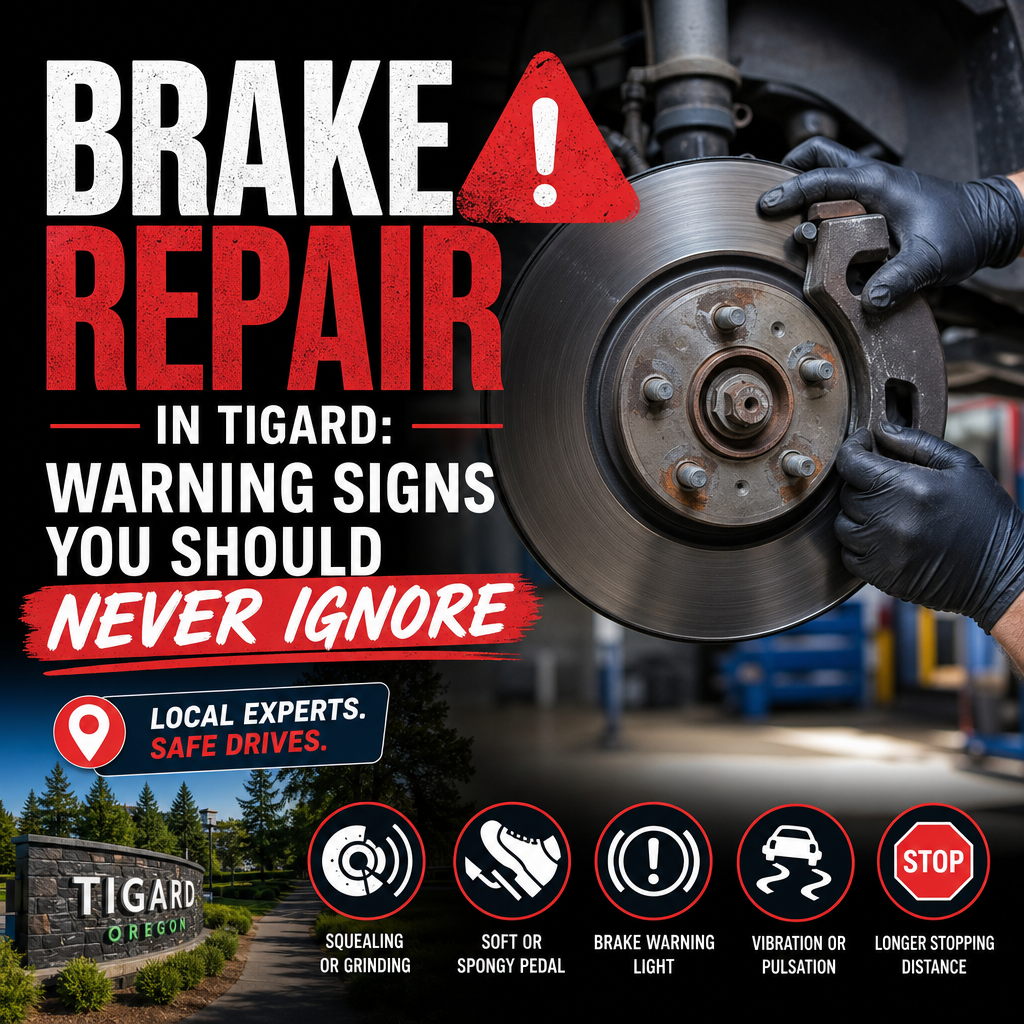
Brake Repair in Tigard: Warning Signs You Should Never Ignore
Brake Repair in Tigard: Warning Signs You Should Never Ignore
Your brakes are one of the most important safety systems in your vehicle, yet they’re also easy to take for granted—until something feels off. When braking performance changes, even a little, it’s worth paying attention. Small issues can quickly become expensive repairs or, worse, a serious safety risk.
If you drive regularly and want to stay safe on the road, knowing the warning signs that point to the need for brake repair in Tigard can help you act before a minor issue turns into a major one.
Why Brake Problems Should Never Wait
Brake issues rarely fix themselves. In many cases, they get worse over time. A worn pad, low brake fluid, or damaged rotor may start as a subtle symptom, but continued driving can lead to longer stopping distances, reduced control, and additional wear on other parts of your braking system.
The good news is that most brake problems give you clues early on. If you know what to look for, you can address them before they become dangerous.
Common Warning Signs of Brake Trouble
1. Squealing or Screeching Sounds
One of the most common signs of worn brake pads is a high-pitched squeal when you press the brake pedal. Many brake pads are designed with wear indicators that create this noise once the pads become too thin.
A squealing sound doesn’t always mean immediate danger, but it does mean your brakes need attention soon. Ignoring it can lead to metal-on-metal contact, which can damage your rotors and increase repair costs.
2. Grinding Noises
If you hear a grinding sound when braking, the problem may already be more serious. Grinding often means the brake pads are fully worn down, allowing the backing plate to rub against the rotor.
This is not something to postpone. Grinding can cause significant damage and reduce your ability to stop safely. If you hear this sound, schedule brake service as soon as possible.
3. A Soft or Spongy Brake Pedal
When you press the brake pedal, it should feel firm and responsive. If it feels soft, spongy, or sinks farther than usual, there may be air in the brake lines, low brake fluid, or another hydraulic issue.
This symptom can point to a serious brake system problem and should be inspected right away. A soft pedal can make it harder to stop quickly in an emergency.
4. Vibrations or Shaking While Braking
A vibrating steering wheel or shaking brake pedal can be a sign of warped rotors. Rotors should be smooth and even so the brake pads can grip properly. When they become uneven, you may feel pulsing or vibration during stops.
This issue can affect braking performance and should not be ignored. It may also signal uneven wear elsewhere in the system.
5. Pulling to One Side
If your car pulls to the left or right when you brake, it could mean one brake caliper is sticking, a brake hose is damaged, or brake pads are wearing unevenly. It may also point to an issue with your alignment or suspension, but brake-related causes are common.
A vehicle that pulls during braking can be difficult to control, especially in wet conditions or during sudden stops.
6. Brake Warning Light
Modern vehicles are equipped with dashboard warning lights that alert you to potential issues. If your brake light or ABS light comes on, don’t assume it’s a false alarm.
The system may be warning you about low brake fluid, worn pads, or an issue with the anti-lock braking system. Even if the car still seems to drive normally, it’s smart to have it checked promptly.
7. Burning Smell
A sharp, chemical, or burning smell after braking can signal overheated brakes. This may happen if you’ve been braking heavily, driving downhill, or if a brake component is sticking.
If the smell is strong or happens often, it could mean your brakes are working harder than they should. Overheating can damage parts and reduce braking effectiveness.
Other Signs to Watch For
Sometimes brake problems show up in less obvious ways. Pay attention if you notice:
- Longer stopping distances
- A brake pedal that feels different than usual
- Fluid under your vehicle near the wheels
- Unusual noises only in certain weather conditions
- Reduced braking response when carrying heavier loads
Even small changes in how your brakes feel can point to a developing problem.
Why Local Brake Inspections Matter
Drivers in Tigard deal with a mix of wet roads, traffic, hills, and stop-and-go conditions that can put extra strain on braking systems. Regular inspections help catch wear before it leads to bigger repairs.
A professional technician can check:
- Brake pads and shoes
- Rotors and drums
- Brake fluid condition
- Calipers and hoses
- ABS components
Catching an issue early can save you money and give you more confidence behind the wheel.
Don’t Wait Until the Brakes Fail
Brake trouble usually starts with a warning, not a sudden breakdown. The key is recognizing the signs and acting quickly. If your vehicle squeals, grinds, pulls, vibrates, or shows a dashboard warning light, it’s time to take it seriously.
Timely brake repair in Tigard helps protect your vehicle, your passengers, and everyone else on the road. When it comes to brakes, waiting is never the safest option.
